Want to work from home, use the skills you already have, and build a career with clients anywhere in the world? Becoming a virtual assistant could be a practical place to start – even if you have never worked as one before.
A virtual assistant, or VA, supports businesses and professionals remotely. Some VAs manage inboxes and calendars. Others create content, update websites, assist customers, organize projects, or handle bookkeeping. The role is flexible because you can shape your services around your strengths and the problems clients need help solving.
This guide will walk you through the process, from choosing what to offer to finding your first client.
Start with what you already know.
You do not need to master every VA service before you begin. One useful skill, a reliable work setup, and the willingness to learn can be enough to take your first step.
What Does a Virtual Assistant Do?
A virtual assistant is an independent professional or remote employee who performs administrative, creative, technical, or operational work online. Instead of working in a client’s office, a VA communicates and completes tasks using tools such as email, video calls, project-management platforms, cloud storage, and messaging apps.
The job can look very different from one client to another. A solo business owner may need a few hours of inbox support each week, while a growing company may hire a full-time VA to coordinate projects, update reports, and communicate with customers.
Can You Become a Virtual Assistant With No Experience?
Yes. You do not need previous experience under the title “virtual assistant” to get started. Many beginners already have transferable skills from office work, customer service, school projects, volunteer roles, running a household, managing a small business, or creating content online.
For example, scheduling meetings shows organization. Responding to customers shows communication. Maintaining records shows attention to detail. Creating social posts shows basic content and design ability. Your first task is to recognize those skills and present them in a way that makes their value clear to a client.
Experience helps, but proof matters more. A few strong work samples, a professional application, and dependable communication can make you a credible candidate even without a long client history.
What Qualifications Do You Need?
There is no single degree, course, or certification required to become a virtual assistant. Clients usually care more about whether you can complete the work accurately, communicate professionally, protect confidential information, and meet deadlines.
The most useful qualities include:
- Clear communication. You can understand instructions, ask helpful questions, and provide concise updates.
- Reliability. You show up when expected and do what you said you would do.
- Organization. You can manage priorities, files, appointments, or task lists without losing important details.
- Digital confidence. You are comfortable learning common online tools and troubleshooting simple problems.
- Initiative. You look for answers and suggest practical next steps instead of waiting for constant direction.
- Professional judgment. You respect boundaries, handle private information carefully, and know when to clarify an instruction.
Training can help you build confidence, but avoid waiting until you feel qualified in everything. Learn the tools that match the service you want to offer, then practise by completing realistic sample projects.
How to Become a Virtual Assistant in 8 Steps
1. Identify Your Transferable Skills
Start by listing the tasks you already do well. Think beyond job titles and focus on activities: writing emails, creating spreadsheets, organizing schedules, researching information, answering inquiries, editing videos, preparing presentations, or following up with people.
Next, connect each skill to a business result. Instead of saying, “I know Google Sheets,” say, “I can organize lead or expense data in Google Sheets, so it is easier to track and report.” This helps potential clients understand why your skill is useful.
2. Choose One or Two Starter Services
It is tempting to offer everything, but a focused offer is easier to explain and sell. Choose one or two services that match your current ability and the type of work you enjoy.
- Administrative support: inbox management, calendar scheduling, data entry, travel research, and document formatting
- Customer support: responding to inquiries, updating help desks, processing routine requests, and following up with customers
- Social media support: scheduling posts, repurposing content, creating simple graphics, and monitoring comments
- Content support: blog formatting, proofreading, research, newsletter setup, and podcast show notes
- E-commerce support: product listing updates, order tracking, inventory reports, and customer messages
- Project support: updating task boards, preparing meeting notes, checking deadlines, and coordinating deliverables
You can expand later. Your first offer only needs to be clear enough for the right client to recognize that you can help.
3. Learn the Essential Tools
Begin with the tools most clients use for communication, documents, and task management. These may include Google Workspace or Microsoft 365, Zoom or Google Meet, Slack, Canva, and platforms such as ClickUp, Asana, or Trello.
You do not need paid subscriptions to every platform. Free tutorials and practice accounts are usually enough to learn the basics. Concentrate on understanding the workflow – how to receive a task, organize the information, complete the work, and report the result.
4. Set Up a Reliable Work Environment
At minimum, you need a dependable computer, a stable internet connection, a professional email address, and a quiet place where you can concentrate and join calls. A headset is helpful for meetings and customer support.
If outages are common where you live, plan a backup internet option and a way to keep essential devices powered. Clients do not expect perfection, but they do expect you to communicate early when an issue may affect a deadline.
5. Create a Simple Portfolio
A portfolio gives clients evidence of what you can do. You can create sample work even if you have not had a paying VA client yet. Just label it clearly as a sample or mock project.
Depending on your chosen service, your portfolio could include:
- A neatly organized inbox-management plan
- A weekly content calendar with three sample social posts
- A customer-support response library
- A formatted spreadsheet or simple reporting dashboard
- A meeting agenda, notes template, and follow-up email
- A short research brief or polished presentation
Quality is more valuable than quantity. Two or three relevant samples are usually more persuasive than a large collection of unrelated work.
6. Decide How You Will Charge
Virtual assistants commonly charge by the hour, by project, or through a monthly package. The right structure depends on how predictable the work is.
- Hourly rate: helpful when the workload varies or the scope is still being defined.
- Project fee: useful when the deliverable and deadline are clear.
- Monthly package or retainer: useful for recurring work with an agreed number of hours, tasks, or deliverables.
Research rates for your service, skill level, target client, and market. Then consider your time, software expenses, taxes, unpaid admin work, and the value of the result you provide. Avoid choosing a rate solely because it is the lowest. A sustainable rate helps you deliver better work and remain dependable.
7. Prepare Your Professional Presence
You do not need an elaborate website before you apply. Start with a polished LinkedIn profile or professional social profile, a clear resume, a short introduction, and an accessible portfolio link.
Make your positioning specific. “I help busy coaches manage their inbox and calendar” is easier to understand than “I can do any virtual-assistant task.” Your profile should quickly answer three questions: Who do you help? What do you do? What becomes easier because of your support?
8. Find and Apply for VA Opportunities
Look for opportunities through your existing network, LinkedIn, remote-job websites, reputable freelance platforms, online business communities, and direct outreach to businesses that fit your service. Referrals often begin with a simple conversation, so let trusted contacts know what kind of support you now offer.
When you apply, personalize your message. Mention the client’s specific need, explain how your experience or sample work relates to it, and suggest a practical next step. Avoid sending the same generic proposal to every listing.
Watch for warning signs such as requests to pay a large fee to receive a job, vague roles involving money transfers, pressure to share sensitive personal information too early, or an offer that seems unrealistic. Research the company and use a written agreement before beginning paid work.
How to Get Your First Virtual Assistant Client
Your first client may come from a job board, but it can also come from someone who already knows and trusts you. Tell former coworkers, friends, local business owners, and professional contacts exactly what you offer and whom you want to help.
A simple outreach message can follow this structure:
- A genuine, personalized opening
- One problem you noticed or understand
- A short explanation of how you can help
- A relevant sample or example
- A low-pressure invitation to talk
Do not measure progress only by immediate replies. Track the applications you submit, the people you contact, the responses you receive, and what you learn. Improving your approach each week is more effective than applying randomly whenever you feel motivated.
Should You Choose a VA Niche?
You do not need a niche on day one. Starting with a broader service can help you discover what you enjoy and where clients see the most value. Once you have experience, you can specialize by service, industry, platform, or client type.
For example, you could become a podcast VA, an Amazon or Shopify VA, a real-estate VA, an executive assistant, a customer-support specialist, or a content repurposing VA. Specialization can make your marketing clearer and may support higher rates, but it should grow from real skills and client needs – not simply a trendy title.
How Much Can a Virtual Assistant Earn?
VA income varies widely. Your location may influence market expectations, but your services, experience, specialization, client type, working arrangement, and ability to demonstrate results also matter. A beginner providing straightforward administrative support may charge differently from a specialist managing launches, automation, bookkeeping, or executive operations.
Rather than relying on one advertised average, research current job listings and freelance profiles for the exact service and market you want to enter. Focus first on building proof, improving your process, and securing reliable work. As your skills and responsibilities grow, review your rate instead of keeping the same beginner price indefinitely.
Common Mistakes New Virtual Assistants Should Avoid
- Offering too many unrelated services without showing clear strengths
- Taking courses continuously but never creating samples or applying
- Copying generic proposals that do not address the client’s needs
- Agreeing to unclear tasks, unlimited revisions, or unrealistic availability
- Failing to confirm the scope, deadline, rate, payment terms, and communication process in writing
- Underpricing so heavily that the work becomes difficult to sustain
- Stopping after a few applications instead of improving and continuing consistently
Frequently Asked Questions
Do I need a degree to become a virtual assistant?
No. Some specialized roles may prefer certain qualifications, but most VA clients prioritize relevant skills, reliable communication, work samples, and the ability to deliver.
Can I work as a VA part-time?
Yes. Many VAs begin part-time while studying, caring for family, or keeping another job. Be clear about your availability and choose work that fits it.
Do I need to be an expert in every VA tool?
No. Learn the tools most relevant to your chosen service and become comfortable learning new systems. Clients often have their own preferred platforms and processes.
How do I build a portfolio without clients?
Create realistic sample projects for the services you want to offer. Label them as samples, explain the goal, and show how your work would help a business.
Where can beginners find VA jobs?
Try referrals, LinkedIn, remote-job boards, reputable freelance platforms, professional communities, and thoughtful direct outreach. Always research opportunities and watch for scams.
How long does it take to get a first client?
There is no fixed timeline. It depends on your offer, preparation, market, application quality, network, and consistency. Treat the search as a process you can measure and improve.
Your VA Career Can Start With One Clear Step
You do not need to have everything figured out before you begin. Choose one service, practise it, create a strong sample, and introduce yourself to one potential client. Then repeat the process with what you learn.
A successful VA career is built through useful skills, reliable work, professional relationships, and steady improvement. Start small, stay curious, and give yourself the chance to become the kind of support clients are glad to keep.
Ready to Find Your First, or Next, VA Client?

Knowing what to do is only the beginning. Presenting your skills professionally can make all the difference when you start applying.
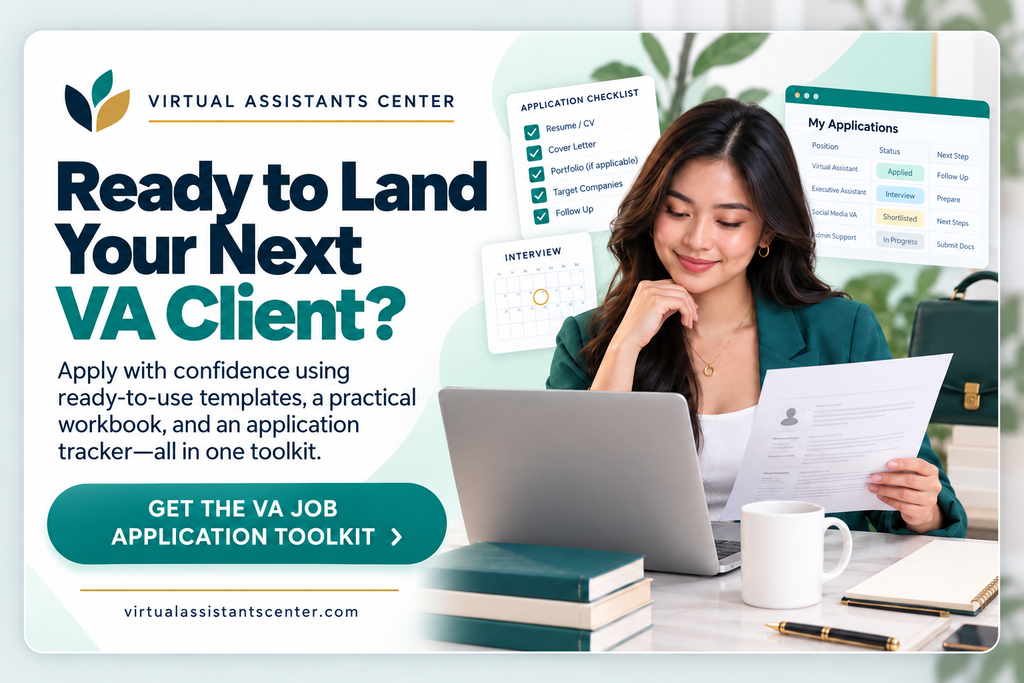
The VA Job Application Toolkit gives you practical templates and step-by-step resources to help you:
- Create a polished, client-ready resume
- Build a portfolio—even without previous VA experience
- Write personalized proposals that stand out
- Prepare confidently for interviews
- Follow up professionally without sounding pushy
- Keep your job search organized and consistent
Spend less time wondering what to write and more time applying for opportunities that fit your skills.